I help Black women professionals advance their careers, dramatically increase their lifetime earning potential, and build generational wealth. Sign up for my newsletter to learn more!
Negotiation Demystified: Transform Your Career Trajectory with Negotiation 101
Hey Reader,
Are you ready to take control of your earning potential and unlock new opportunities in your professional journey?
Negotiation is a powerful skill that can help you do just that. Whether you’re seeking a higher salary, improved benefits, or a better work-life balance, understanding the key principles of negotiation is essential.
So let's dive into the three fundamental principles that will empower you to negotiate effectively and secure the best possible outcomes. Get ready to transform your approach to negotiation and elevate your career to new heights!
ZOPA — Finding the Common Ground
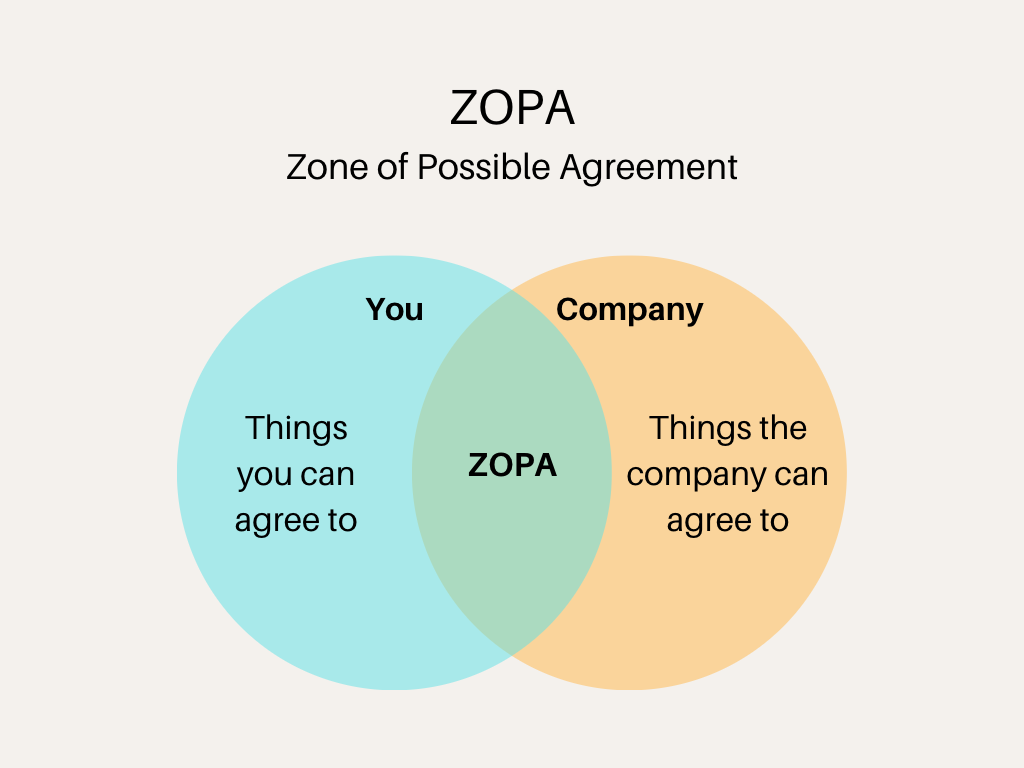
In the intricate dance of negotiation, finding common ground is crucial. That’s where the Zone of Possible Agreement (ZOPA) comes into play. The ZOPA refers to the range or overlap between the negotiating parties' acceptable positions. It represents the space In which both parties can potentially reach a mutually beneficial agreement.
 |
How It Works
The ZOPA is determined by considering each party’s desired outcomes, interests, and priorities. By finding common ground within the ZOPA, negotiators can work towards reaching a solution that satisfies both parties’ needs and maximizes the value of the agreement.
Example
You are negotiating a new role with a potential employer. The salary range for the position is $60,000 to $70,000 per year, and you have a desired salary of $65,000 or higher. The ZOPA is the range between $65,000 and $70,000, where both parties can potentially reach a mutually acceptable agreement on the salary.
BATNA — Your Fallback Position
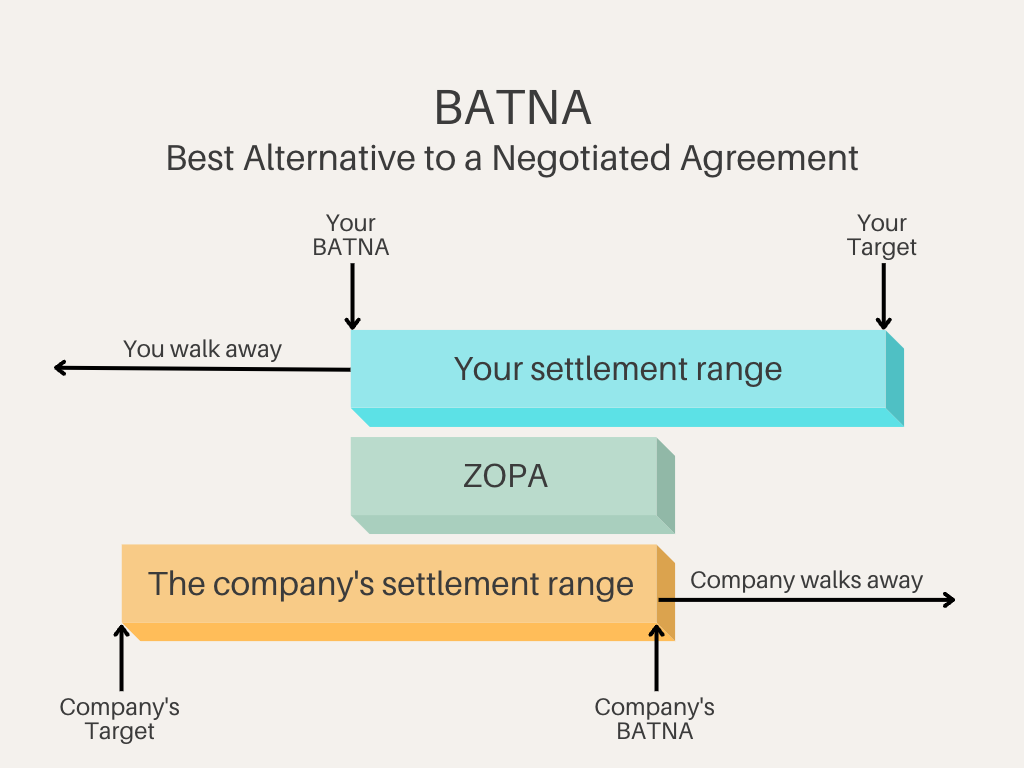
Have you ever wondered what your options are if negotiations fall through? That’s where the concept of the Best Alternative to a Negotiated Agreement (BATNA) becomes invaluable. Your BATNA is your fallback position, the course of action you will pursue if the negotiation fails to meet your expectations.
 |
How It Works
By assessing and understanding your BATNA, you gain clarity and leverage during negotiations. This BATNA is crucial because it provides you with a point of comparison. If the proposed agreement is less favorable than your BATNA, it may be in your best interest to walk away from the negotiation. Conversely, if the proposed agreement is better than your BATNA, it is likely a favorable outcome for you.
Example
In the negotiation for a new role, your BATNA might be considering other job offers or exploring alternative opportunities. If the employer’s offer falls below your BATNA, it may be in your best interest to walk away from the negotiation and pursue other options.
Win-Win — Collaboration for Success
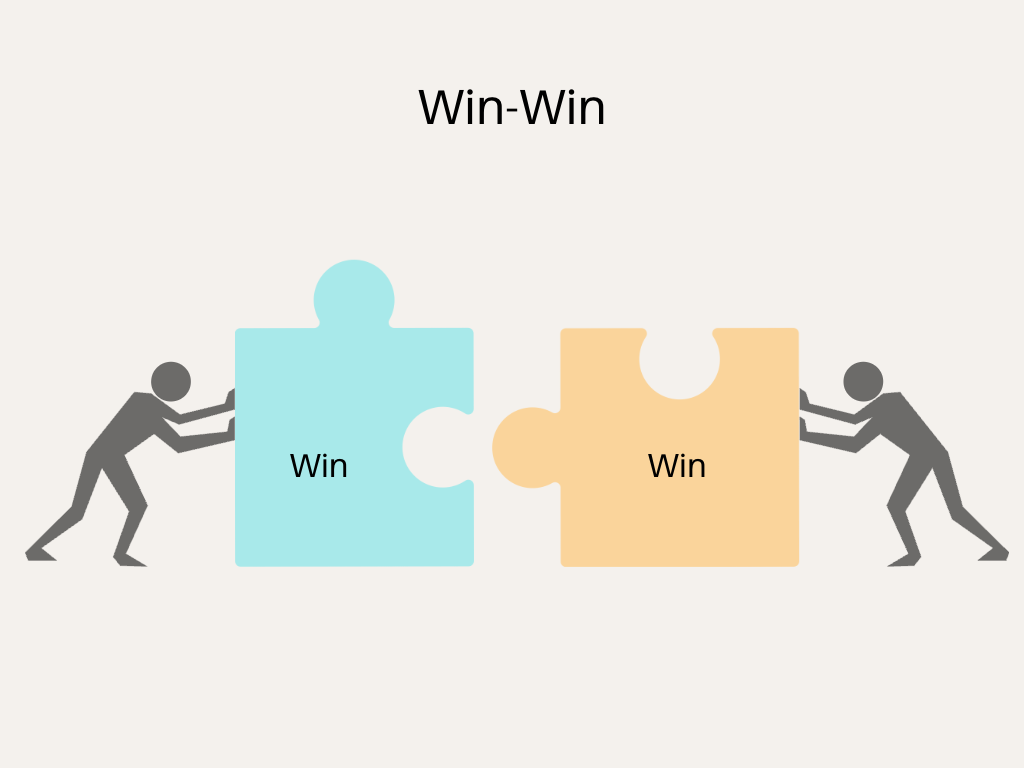
Negotiation doesn’t have to be a zero-sum game. In fact, a win for both parties is not only possible but highly desirable! Enter the Win-Win approach, where collaboration and problem-solving take center stage. The goal is to create value and satisfy the interests of both parties involved, rather than seeking a win at the expense of the other party.
 |
How It Works
Win-Win negotiations emphasize problem-solving, open communication, and exploring creative options. By seeking mutually beneficial solutions, you can build positive relationships, foster long-term cooperation, and create value that extends beyond monetary gains.
Example
When negotiating an offer for a new role, a Win-Win approach could involve exploring various aspects beyond salary, such as bonuses, paid time off, remote work flexibility, and other benefits. For example, you could propose a slightly lower salary than your initial ask in exchange for a signing bonus, additional vacation days, or the option to work remotely a few days a week. This approach aims to find a mutually beneficial solution where both parties feel they have gained value and their needs are met.
Tying It All Together
By mastering these three key principles — ZOPA, BATNA, and Win-Win — you will develop a solid foundation for negotiation success. In next week's newsletter, we will delve further into actionable strategies and techniques to enhance your negotiation prowess.
Get ready to take your negotiation skills to the next level and secure the rewards you deserve. Your professional journey awaits!
Best,
'Tine
P.S. If you enjoy reading the Claim Yours Newsletter and find it helpful, please consider making a donation to my PayPal. Your support allows me to continue providing valuable content like this and contributes to my mission to help Black women attain financial freedom and build generational wealth. Thank you for your generosity!
'Tine Zekis | Founder & CEO, Getting Black Women Paid
I help Black women professionals advance their careers, dramatically increase their lifetime earning potential, and build generational wealth. Sign up for my newsletter to learn more!
Hi Reader, I want to share something with you—both as your coach and as someone who’s walking this path in real time. I’m taking a break. From coaching.From the newsletter. Not forever—but for this season. And I want to tell you why Because this is important: “Getting Black women paid” is not the end of the sentence. It’s: Getting Black women paid…so that… We can take breaks when we need them We can spend time with the people we love We can prioritize our health and well-being We can live...
Hi Reader, Let’s start here: The gap is real Black women earn a fraction of what others earn—and that reality shows up in more ways than just a paycheck. But here’s what’s important to understand: It’s not always obvious Bias doesn’t always look like: Someone saying “no” directly A clearly unfair policy A moment you can point to Sometimes it looks like: Being overlooked for opportunities Being praised but not promoted Being expected to do more—with less recognition And over time, that adds up...
Hi Reader, Let’s talk about money—but not the way we usually do. Not budgets.Not spreadsheets.Not “just earn more.” Let’s talk about where your money beliefs came from Because whether we realize it or not… Most of us are making financial decisions based on: What we saw growing up What we were told was “safe” What felt available—or unavailable—to us And those patterns run deep It can look like: Staying financially dependent longer than you want to Avoiding risk, even when you’re ready Feeling...